
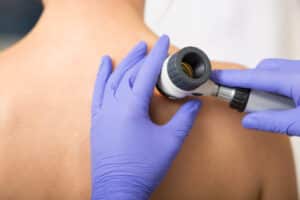
Basal cell carcinoma (or BCC) is the most common type of skin cancer in the United States, yet many people are surprised to learn how easily it can develop over time. A small pearly bump, a sore that will not heal, or a patch of irritated skin may not seem alarming at first, but these changes can sometimes point to something more serious.
At ProDerm Skin & Surgery in Austin, Dr. Sydney Larkin Proffer, MD, MS, FAAD, frequently cares for patients with BCC. A board-certified dermatologist with fellowship training in micrographic surgery and dermato-oncology, she provides personalized care backed by extensive training and clinical expertise.
What Is Basal Cell Carcinoma?
Basal cell carcinoma affects the basal cells in the outer layer of the skin. This type of cancer grows slowly and is usually highly treatable when caught early.
BCC most commonly appears on areas frequently exposed to the sun, including the:
- Face
- Neck
- Ears
- Scalp
- Shoulders
- Arms
Although it rarely spreads to distant parts of the body, it can extend deeper into surrounding tissue if left untreated.
Sun Exposure Is the Leading Risk Factor
Long-term exposure to ultraviolet (UV) radiation is one of the biggest causes of basal cell carcinoma. UV rays damage the DNA in skin cells over time, increasing the chance of cancerous changes.
Common sources of UV rays include:
- Natural sunlight
- Tanning beds
- Sunlamps
People who spend significant time outdoors for work or recreation are more likely to be diagnosed with BCC, especially if they do not regularly use sunscreen or protective clothing.
Fair Skin and Certain Physical Traits
Some people are naturally more vulnerable to BCC than others. Risk tends to be higher in those with:
- A fair complexion
- Light-colored eyes
- Blonde or red hair
- Skin that burns easily
- A history of freckles
Age and Previous Skin Cancer History
Basal cell carcinoma more frequently affects older adults because UV damage builds up gradually over the years. However, younger adults are increasingly being diagnosed as tanning habits and sun exposure patterns change.
You may also face a higher risk if you have:
- Had BCC before
- Experienced other forms of skin cancer
- A family history of skin cancer
Other Factors That May Increase Risk
Several other factors can contribute to the development of basal cell carcinoma, including:
- Weakened immune function
- Exposure to radiation therapy
- Contact with certain chemicals, such as arsenic
- Chronic skin inflammation or injuries
Schedule an Exam Today
If you notice a suspicious spot or have concerns about skin cancer risk, ProDerm Skin & Surgery in Austin, TX, offers comprehensive evaluations and advanced BCC treatment options. Call (512) 535-6000 to schedule a consultation with Dr. Sydney Larkin Proffer.